







팝업레이어 알림

팝업레이어 알림이 없습니다.

Business

Creating change in cities, culture, and healthcare
with AI·Data·XR-based solutions.

01 PainCube

We predict pain you cannot see from data,
and help clinicians decide faster with AI.
PainCube PainCube

PainCube Introduction

PainCube is an AI-based solution for pain measurement and analgesic dosing decisions,
developed jointly with Johns Hopkins University and Korea University Anam Hospital.

In clinical practice, 80% of patients do not receive adequate pain management.
Without an objective way to measure pain or a precise standard for dosing analgesics,
care has relied on patients' subjective self-reports and clinicians' intuition.

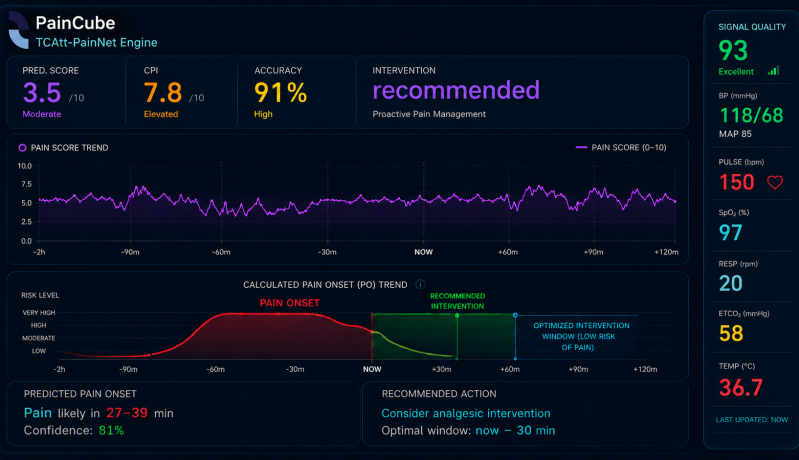
PainCube analyzes vital signs in real time to quantify pain
and predict it 30–60 minutes before it occurs
.
Feature 01
Sensor
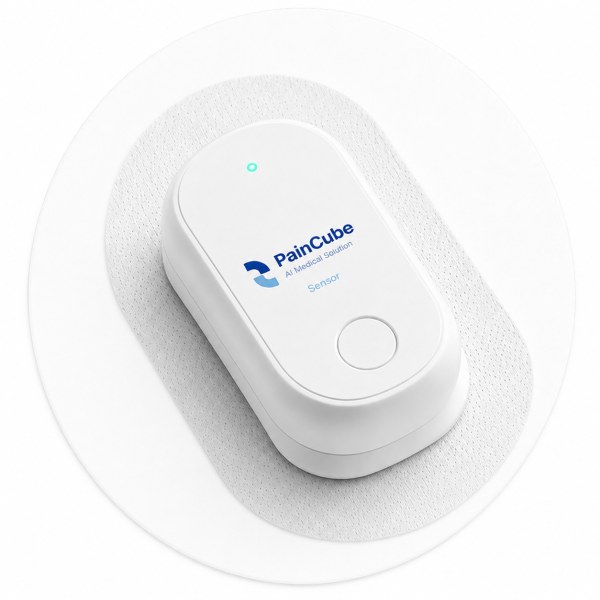
Real-time capture of six or more multimodal vital signs
Feature 02
AI
Pain quantification and advance prediction with DDCAE and TCAtt-PainNet
Feature 03
CDSS

Clinical decision support through pain-prediction alerts and dosing recommendations

PainCube Strengths

  • Pain quantified and predicted in advance
    Unlike conventional assessment that depends on what a patient can express, PainCube analyzes vital signs in real time to quantify pain and predict it 30–60 minutes ahead.
  • Integrated analysis of multiple vital signs
    A range of vital signs — ECG, PPG, HRV, SpO₂, blood pressure and respiration — are analyzed together, so pain can be observed continuously even in unconscious patients or those unable to communicate.
  • DDCAE, the denoising AI
    An encoder–decoder model exploits the regularity of pain and the irregularity of noise to detect and remove artifacts mistaken for pain, such as ECMO operation or patient movement.
  • TCAtt-PainNet, the quantification and prediction AI
    By learning vital-sign patterns before pain onset and pain-reduction patterns after analgesic administration, it produces a 0–10 Clinical Pain Index and predicts onset 30–60 minutes ahead.
  • Clinical decision support (CDSS)
    A real-time monitoring dashboard pairs pain alerts with data-driven analgesic dosing decisions covering drug, timing and dose.
  • From reactive to preemptive care
    PainCube supports the shift away from responding after pain occurs, toward preemptive pain management that predicts pain and addresses it in advance.

PainCube Key Functions

Capture of multiple vital signs and clinical data
Upper-arm and wrist-band sensors capture six vital signs alongside six categories of medical record data. ECG, PPG, SpO₂, respiratory rate, heart rate and body temperature are captured and combined with age and sex, diagnosis, surgical information, pain score (NRS), medication data and analgesic administration records.
More than twelve types of vital-sign and medical-record data are collected across 32 beds at Johns Hopkins University and 24 beds at Korea University Anam Hospital.
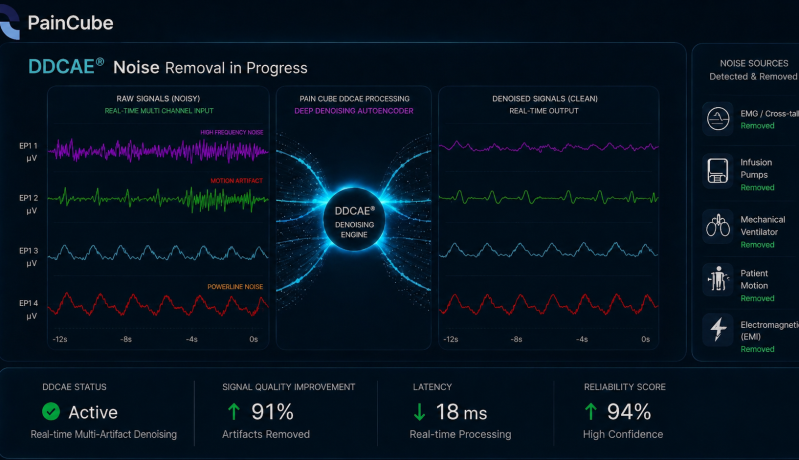
DDCAE, the denoising AI
It strips away noise mistaken for pain and extracts the pain signal itself. An encoder–decoder architecture learns the regularity of pain and the irregularity of noise.
Detecting and removing ICU-specific artifacts such as ECMO operation and patient movement resolves the false-alarm problem and raises prediction accuracy.
TCAtt-PainNet, the quantification and prediction AI
It scores pain from 0 to 10 and predicts onset 30–60 minutes ahead. The model learns vital-sign patterns before pain onset together with pain-reduction patterns after analgesic administration.
It produces a 0–10 Clinical Pain Index and predicts onset 30–60 minutes ahead, securing the golden hour for clinicians to prescribe and administer analgesics.
Clinical decision support system (CDSS)
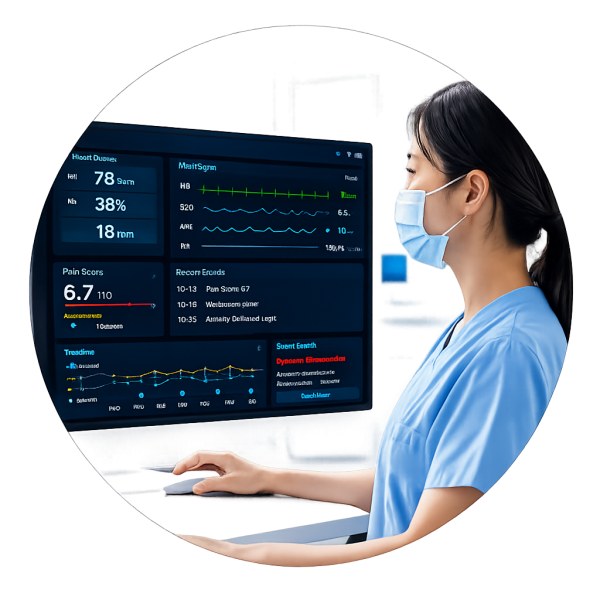
A real-time dashboard delivers pain alerts together with dosing recommendations. Pain trends are monitored per patient in real time, with alerts 30–60 minutes before onset.
Data-driven analgesic dosing decisions covering drug, timing and dose support pain management tailored to each patient.
Clinical Impact
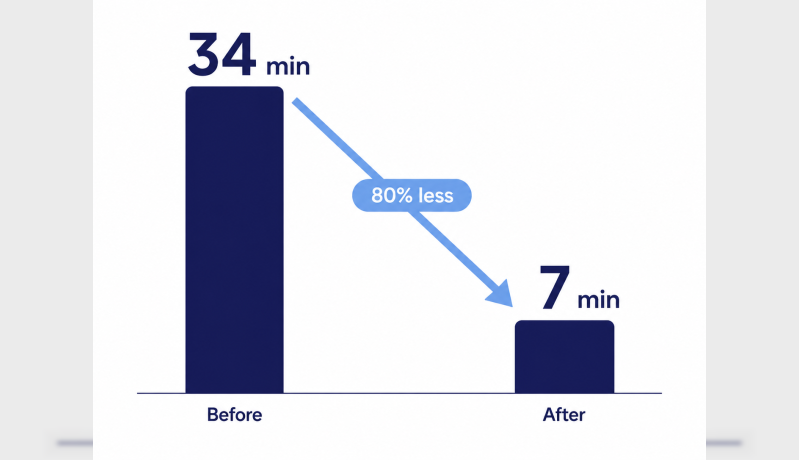
Streamlining the whole pain-management process cuts clinician time and cost by 80%. Before adoption, pain management takes 34 minutes per patient on a 12-hour shift basis (SCCM PADIS 2018; Gélinas et al., 2006).
Streamlining routine rounds and the assessment and administration workflow brings this down to 7 minutes, which gives hospitals a concrete basis for adoption.

If you would like to know more about PainCube, please get in touch. Curious about
PainCube?

Contact Us